In the subway car in the early morning, Xiao Chen took out his mobile phone and clicked on the browser to directly enter the 3A masterpiece that was cleared at home last night. When the game screen unfolded smoothly on the 5.5-inch screen, the passenger next to him looked curiously - the player who had not downloaded any client was experiencing the magical moment brought by the combination of cloud games and H5 technology.
"It's like suddenly discovering that the old radio at home can watch 4K TV." This is how veteran player Lao Zhang described his feeling of experiencing cloud games in the H5 environment for the first time. His old mobile phone can't run large-scale games, but it can play the latest open-world games smoothly through direct streaming through the browser. The magic of "playing high-configuration games with low-configuration devices" is reshaping players' understanding of hardware needs.
Technological breakthroughs often occur in the simplest scenarios. The H5 cloud game scheme developed by an independent studio allows players to share games in WeChat groups as simple as sharing web links. Click the link to enter the game. You don't need to download the application and it doesn't take up storage space. This extreme convenience makes the user retention rate three times higher than that of traditional cloud game applications a month after the program was launched.
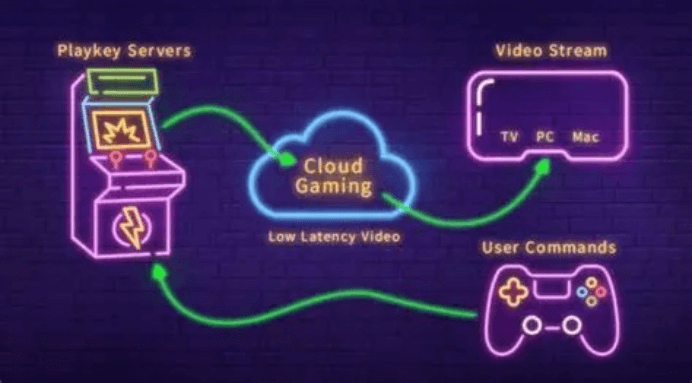
The real innovation occurs in the loading speed. Traditional cloud games need to start special applications and go through the process of logging in, matching servers and so on. The H5 scheme realizes "click-to-play", compressing the waiting time from minutes to seconds. Just like the difference between elevators and stairs, although they can all reach the same floor, the convenience of the experience is very different.
The combination of edge computing and H5 is solving the biggest pain point of cloud games - delay. In a test, the H5 cloud game using a new transmission protocol achieved an operating delay of less than 60 milliseconds under the 4G network, which is close to the level of a professional game console. When the player uses consecutive moves on the touch screen, the character's response is almost undelayed.
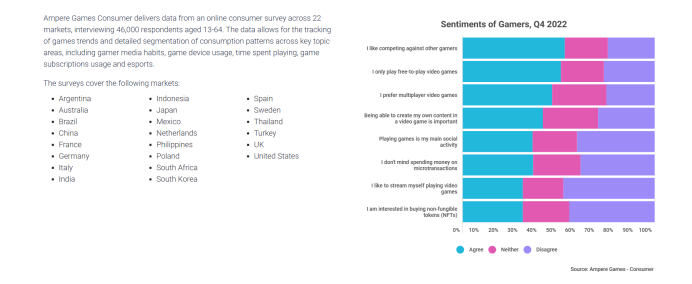
"We are witnessing the popularization of cloud games." Li Yue, an industry analyst, pointed out. H5 technology has greatly reduced the threshold of users' use, allowing cloud games to move from the core player circle to a wider range of lightweight users. Data shows that 45% of users who experience cloud games through H5 are exposed to such services for the first time.
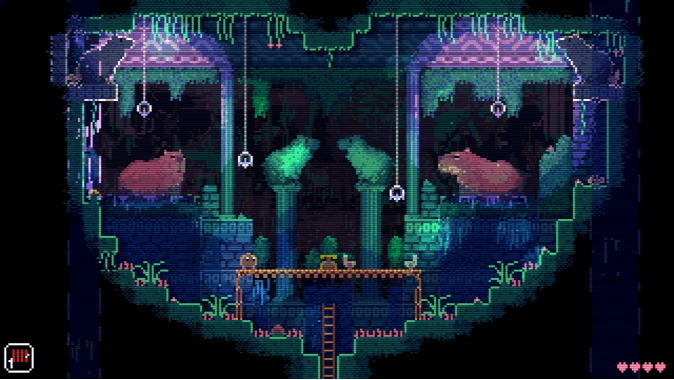
As a result, the content ecology is also more diverse. A small team deployed the physical simulation game they developed directly on the H5 cloud game platform, allowing users to experience complex scenarios that require a lot of computing through the browser. This model allows creative works to jump out of the cage of hardware restrictions, just like a virtual workstation equipped with unlimited performance for each creator.
However, the challenges still exist. Ensuring picture quality with limited bandwidth is like transporting pure water in a thin water pipe, which requires sophisticated compression algorithms and adaptive code rate technology. Inspired by Netflix's adaptive flow, a development team developed an H5 player that can dynamically adjust the image quality according to the network conditions, so that the game can still be played in a weak network environment.
Interaction design is another key topic. When games are no longer limited by specific devices, how to provide a unified and high-quality experience for different operation methods such as key and mouse, touch, handle, etc. has become a new challenge for developers. Just like a chef wants to prepare dishes that everyone is satisfied with for a table of guests, he needs to take into account various preferences and habits.
The possibilities of the future are exciting. With the popularity of 5G network and the maturity of the WebGPU standard, H5 cloud games are expected to achieve stable output of 4K/60 frames within three years. At that time, playing the light chasing game through the browser will no longer be a dream, but a reality within reach.
When the technical barriers gradually disappear, the essence of the game will be presented more clearly - it is no longer exclusive to specific devices, but an interactive experience that can be obtained at any time. Just as electricity frees home appliances from location restrictions, the combination of H5 and cloud games is allowing the game experience to break through the hardware constraints.
Does your device browser also have a surprising cloud game experience? Or do you have a unique insight into the future of H5 cloud games? Welcome to share your observations in the comment section. Perhaps your ideas are an important inspiration to promote this change.